
Discovering the Platypus
Under mammals, I did some research on platypus. Both anatomically and morphologically, this species differs greatly from other mammals. According to the IUCN Red List, the platypus has a near-threatened status. In order to encourage you to learn more about this amazing species, I decided to write down a brief introduction.
This animal can be considered a combination of three other groups of animals. They are reptiles, birds, and mammals. Actually, this is a mammal. Here is the taxonomy of Orthorhynchus anatinus.
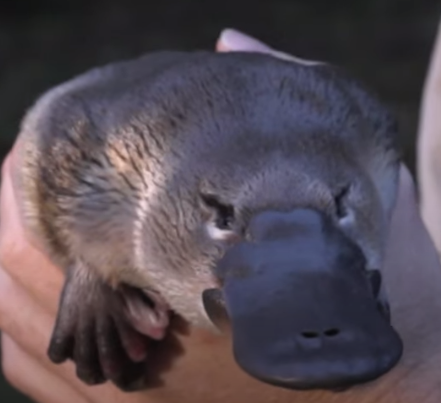
The platypus was first discovered in 1798. When people saw it first, they thought it was created by sewing several animals together. Because it has a body like an otter, flat bill, webbed feet like a duck, and claws like a reptile.
Taxonomy and Classification
- Domain – Eukarya
- Kingdom – Animalia
- Phylum – Chordata
- Class – Mammalia
- Order – Monotremata
- Family – Ornithorhynchidae
- Genus – Ornithorhynchus
- Species – Anatinus
Habitat, Behavior and Adaptations
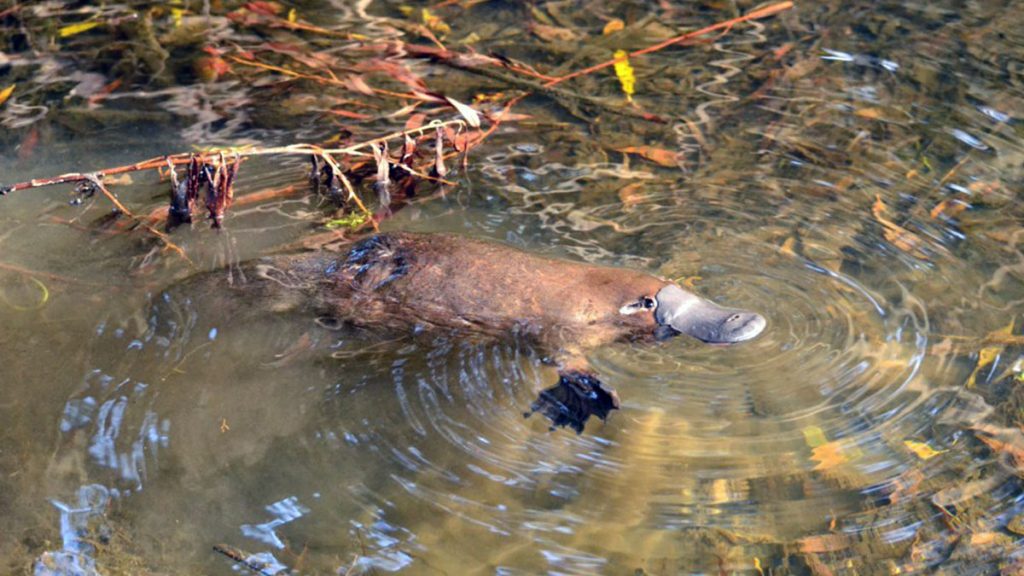
Mostly, platypus live in the Australian region. Fresh water systems such as lakes, ponds, and river basins provide habitat. Also, they are nocturnal animals. They hunt for food at night time and dusk.
Most special thing is, although platypuses are mammals they lay eggs. A female lays one to three eggs once and places them between her rump and tail to keep the eggs warm. The eggs hatch after about ten days. Unlike other mammals, female platypuses don’t have nipples. Hence the babies come to mother’s chest area and drink milk dropping on her body.
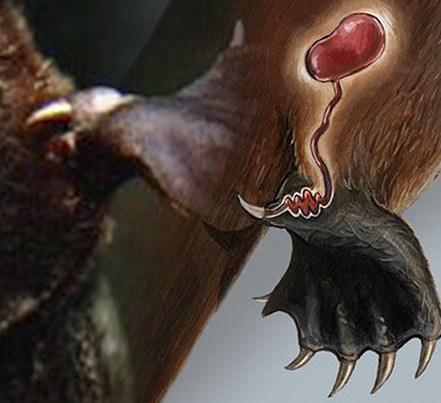
Male platypuses produce venom in glands near the spurs of their hind legs. The venom is useful to mate during the breeding season.These creatures are carnivorous. They hunt for food in the water. They use their sensitive bill to detect preys on muddy bottom of water bodies. Mostly they hunt shrimps, beetles, water bugs, tadpoles etc.
Some animals act as the predators of platypuses such as crocodiles, eagles, carpet pythons and also foxes.
Morphological Characteristics
The average size of an adult male ranges from 15 inches to 30 inches and female size ranges from 14 inches to 26 inches.
A platypus has a broad, flat tail and their body is covered with dense, brown biofluorescent and waterproof fur. They use the tail as a storage of fat and fur helps it to keep its body warm. The bill is smooth as well as rubbery. There are thousands of sensory receptors on this bill. They help the animal to detect movement of potential food.
Also, they have the ability of electroreception. Electroreceptors are located in the skin of the bill. They detect the small electric signal, created by preys. Another interesting fact is, platypuses show a biofluorecence under UV light with its fur.
Hence the fur of platypus is thick and a platypus has multiple layers of fur, they are able to be water proof when they are in under water, this feature helps it to keep the body warm and dry. Many animals have a stomach to digest and store food. But the platypus doesn’t have a stomach.
The skeleton of the platypus is heavy and there are several similarities to modern reptiles. They are clever swimmers and divers but it is hard to walk on land. Because the limbs are short, heavy and splayed away from the body. So a platypus uses almost 30% more energy when moving on land compared to a terrestrial mammal of similar size. They are almost solitary animals but several individuals share the same waterbody. Sometimes they produced a low pitched growling sound when disturbed or handled.