
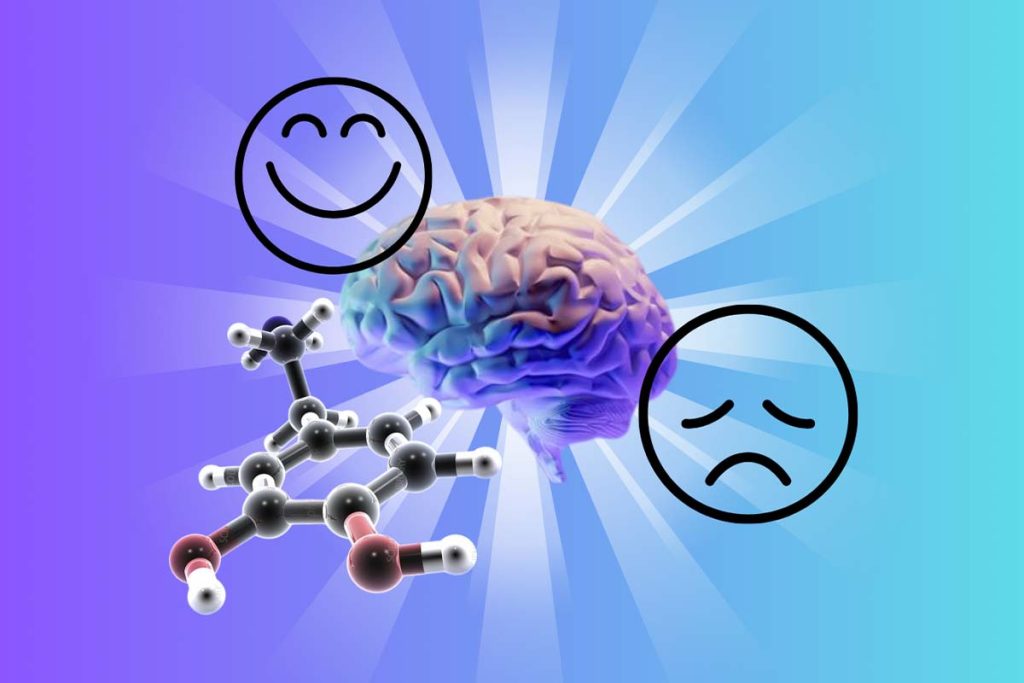

Imagine this: You’re working on a challenging task, but as soon as you get a notification on your phone, you drop everything. That tiny burst of excitement? That’s dopamine at work. Now, what if I told you that this same neurotransmitter is responsible for much more than just checking your phone? It’s at the heart of what drives us—our very motivation to get up in the morning, to pursue goals, and to seek out pleasure.
Dopamine, often called the “feel-good neurotransmitter,” is like the brain’s very own motivation molecule. But let’s dive deeper into what dopamine really is, how it affects our lives, and—more importantly—how we can take control of it for a happier, more balanced life.
What Is Dopamine?
Think of dopamine as the brain’s internal messaging system. It’s a chemical messenger that carries signals between nerve cells. When we do something that brings us pleasure—whether it’s eating, exercising, or simply laughing—dopamine gets released, and we feel good. But dopamine isn’t just about pleasure. It’s essential for memory, attention, and even physical movement.
Without dopamine, we’d struggle to focus on tasks or even feel motivated to complete them. It’s the spark that keeps us moving forward. But here’s the catch—dopamine also controls pain. In fact, the same areas of our brain that process pleasure also handle pain. It’s all about balance.
The Balance of Pleasure and Pain: The Dopamine Tug-of-War
Let me tell you a story about balance. Picture a scale. On one side, you have pleasure; on the other, pain. Every time we experience pleasure, the brain naturally swings towards pain to restore balance. It’s like a seesaw effect.
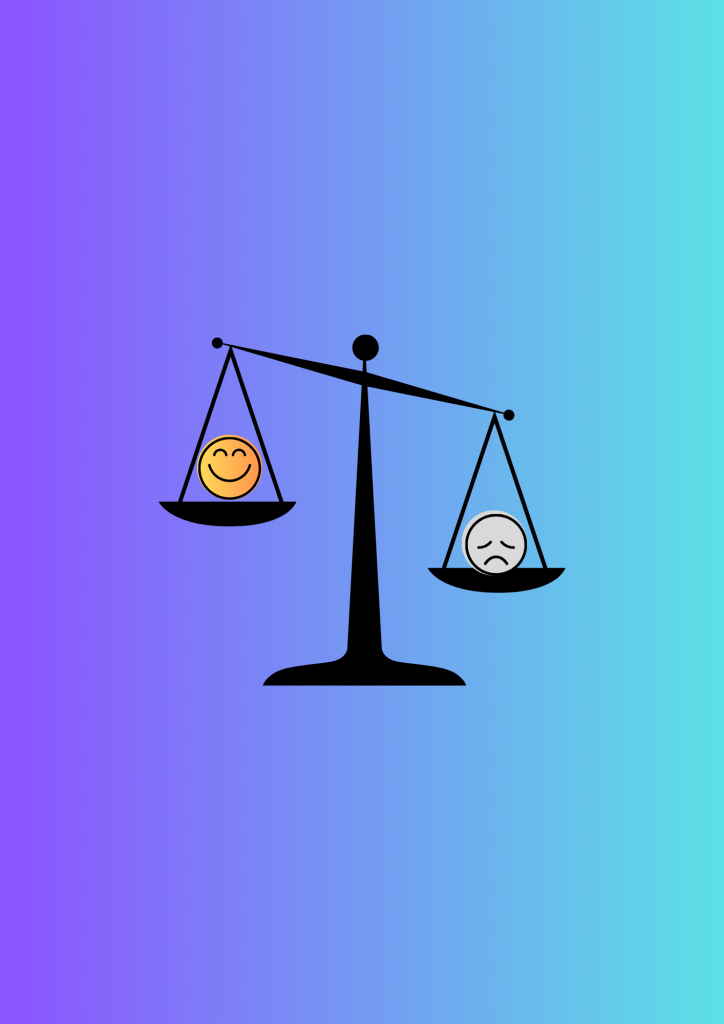
Now, what happens if you keep tipping that scale toward pleasure? Say, binge-watching TV shows or indulging in fast food regularly. The more we chase that pleasure, the more our brain compensates with discomfort. This explains why, after a day of endless social media scrolling, you might feel drained or irritable.
It’s a fascinating system, and understanding it helps us see why constantly chasing happiness can sometimes make us feel worse in the long run.
The Modern Dopamine Challenge: Cheap Thrills Everywhere
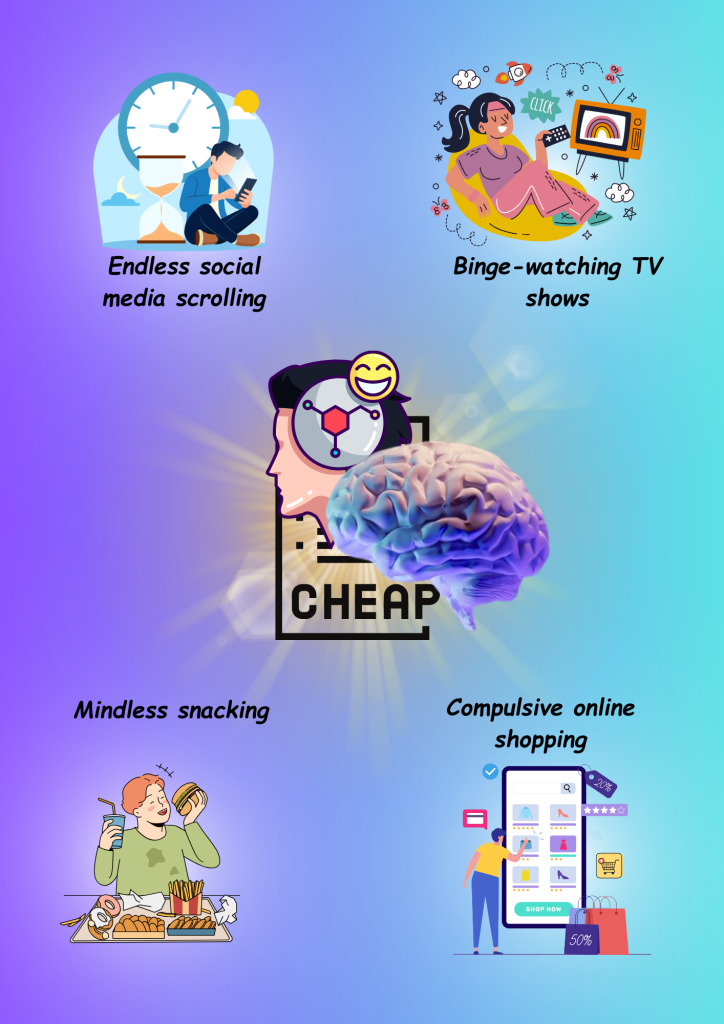
Let’s fast forward to today. We’re living in a world that’s constantly bombarding us with “cheap dopamine.” You know the type—instant, short-lived pleasure that doesn’t cost much. Think social media notifications, fast food deliveries, or a quick online shopping spree. Sure, these things feel good in the moment, but the real question is: what’s the cost?
The cost is that our brains get hooked on these quick hits, and suddenly, the more meaningful things—like a long walk in nature, finishing a challenging project, or spending time with loved ones—don’t feel as rewarding.
Here are some common culprits of cheap dopamine:
- Endless social media scrolling
- Binge-watching TV shows
- Mindless snacking
- Compulsive online shopping
Sound familiar?
Signs of Dopamine Imbalance: When Things Go Off-Balance

When our dopamine system is out of whack, it doesn’t take long for us to notice. Here’s what that imbalance looks like:
- You lack motivation, even for tasks you used to enjoy.
- Your concentration is shot—you can’t focus on anything for too long.
- Your sleep becomes irregular, and your mood swings take over.
- Even your body feels off—muscle stiffness, restlessness, and fatigue.
If any of this sounds like you, it might be time to check in with your dopamine levels.
Breaking Free: How to Take Control of Your Dopamine
Now, here’s the good news: we can take control of our dopamine balance. It’s all about giving your brain the right kind of rewards—ones that last longer and lead to a more sustainable sense of well-being.

01. Boost Dopamine Naturally
- Exercise regularly: Get moving! Physical activity is one of the most effective ways to naturally boost dopamine.
- Eat dopamine-friendly foods: Think protein-rich meals—turkey, eggs, legumes, and lean meats.
- Prioritize sleep: Consistent sleep helps reset your dopamine levels.
- Soak up the sun: A little sunlight can go a long way in increasing dopamine receptors.
- Enjoy music: Listening to your favorite tunes can trigger a healthy release of dopamine.
02. Lifestyle Modifications
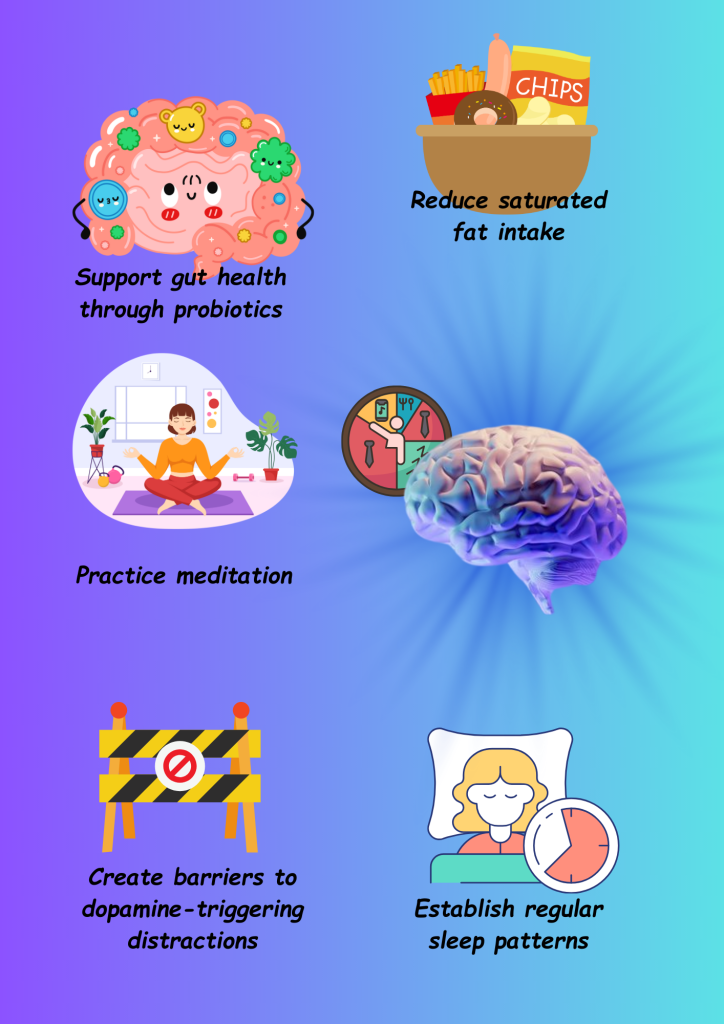
- Cut back on saturated fats.
- Support gut health—probiotics can do wonders.
- Practice meditation to calm your mind.
- Create physical and mental barriers to distractions like social media.
- Stick to regular sleep patterns.
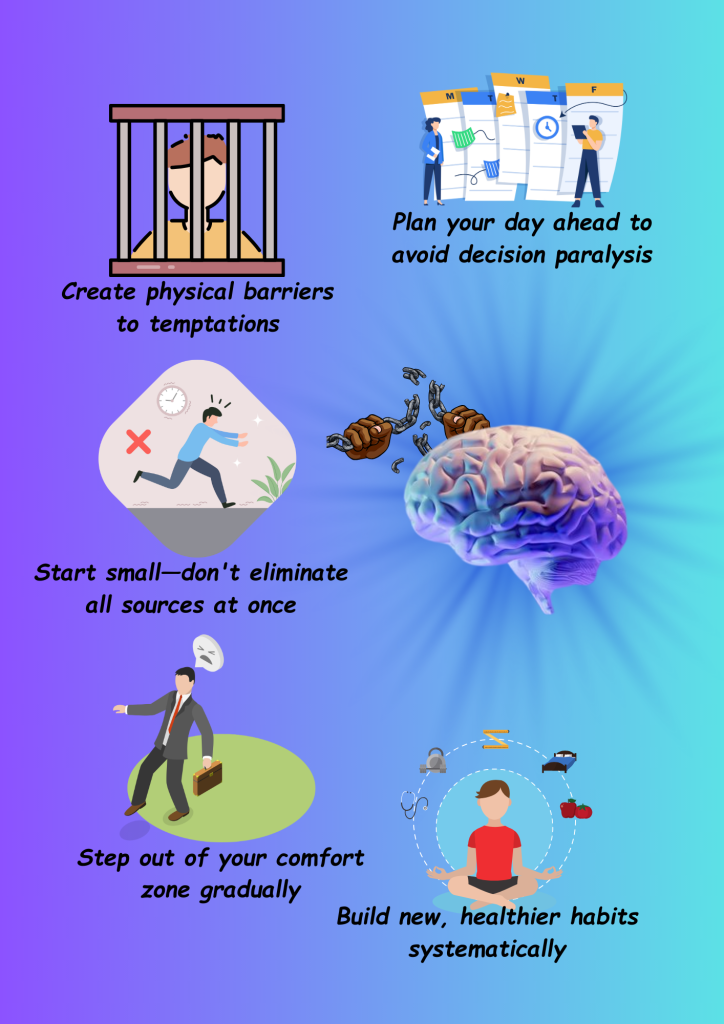
03. Break the Cycle of Cheap Dopamine
- Plan your day in advance. Having a plan helps avoid decision paralysis and random distractions.
- Build barriers—physically remove yourself from temptations like your phone when you need to focus.
- Don’t overwhelm yourself by quitting all bad habits at once. Start small and build up.
- Gradually step out of your comfort zone. New, healthier habits take time.
The Takeaway: Find Meaning in Motivation
Mastering dopamine isn’t about cutting out pleasure entirely—it’s about creating a sustainable balance that supports your well-being. By understanding how dopamine works and making small but impactful lifestyle changes, you can cultivate a healthier relationship with motivation, reward, and long-term happiness.
So, let’s take a step back. Instead of chasing short-term rewards, let’s aim for the things that matter—those deeper, more meaningful moments that truly make life fulfilling. Start small, be consistent, and before you know it, you’ll be in control of your own dopamine system, creating a life full of purpose and joy.